
Buy a condominium in Singapore is a big financial choice, especially if the property you’re looking at is an Executive Condominium. Unlike a private condominium, a new executive condominium has certain rules you need to follow to qualify because a builder develops it under a special government housing plan. Buyers should consider more than just the price they pay and need to understand if their household qualifies, how much income they can have, their past property ownership, the loan choices available, and the initial expenses they will face. This guide shows you how to find out if you’re eligible for a new EC, how to look at your funding choices, and what you should gather before making a purchase decision.
What Is an Executive Condominium?
An Executive Condominium has features from both public and private housing. New EC units are created and sold by private developers, but buyers need to satisfy certain requirements set by HDB in order to buy a condominium in Singapore from the developer. These conditions can include things like the structure of the household, whether someone is a citizen, their age, how much money they make, if they own property, and if they have received housing subsidies before.
The rules are especially important because not everyone who can pay for the item will automatically get a new EC. For example, applicants usually need to form a qualified family unit, but if two or more single people apply together, they must all be Singapore Citizens and at least 35 years old. The maximum income limit for a household also varies based on when the land for the EC site was sold through a tender, so buyers need to look at the specific project details instead of using just one income number.
Check Your EC Eligibility First
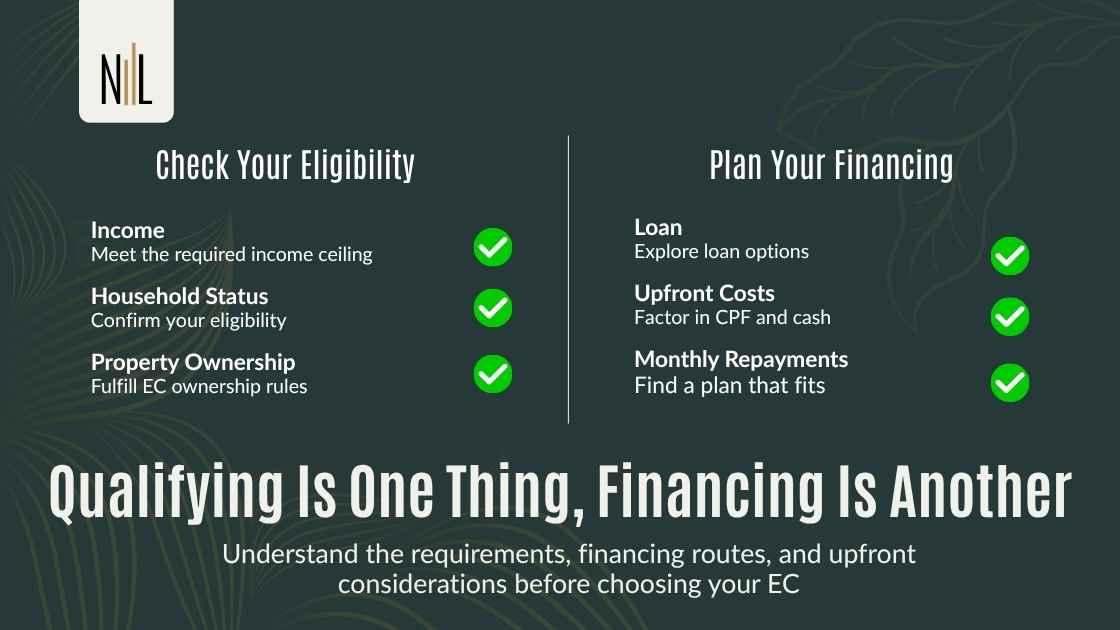
Before you look at different layouts or figure out your monthly payments, first make sure your household qualifies for the basic EC criteria. For new EC units, the people applying or living there must be part of a qualifying household type, like a married couple, a couple who have gotten engaged, specific parent and child households, or groups of single people who qualify. At least one person applying should usually be a Singapore Citizen, and there might be extra rules based on the type of family they’re part of.
Another thing to think about when buying a condominium in Singapore under the EC scheme is your age. Applicants usually need to be at least 21 years old, and if two or more people are applying together as single applicants, they all need to be at least 35 years old. The rules might change based on whether you’re applying as a family or as individual applicants, so it’s a good idea to check the specific eligibility requirements early to avoid any unwanted delays later.
Key EC Eligibility Requirements
| Eligibility factor | General requirement for a new EC |
| Household | Must form an eligible family nucleus |
| Citizenship | At least one Singapore Citizen for most eligible family schemes |
| Minimum age | 21 years old |
| Joint singles | All applicants must be Singapore Citizens and at least 35 |
| Income ceiling | Depends on the EC site’s tender award date |
| Property ownership | Restrictions apply to existing and recently disposed properties |
| Previous housing subsidy | Resale levy may apply to eligible second-timer households |
These requirements are just the beginning because HDB also has rules about existing properties and past housing subsidies. Applicants usually can’t own or have any share in a private home either locally or abroad, and there are rules about selling a private home within the last 30 months. Second-time homebuyers might also have to pay a resale fee if it applies.
Understand the EC Income Ceiling
The executive condo income limit is a key requirement you need to meet before buying a new EC. As of 2026, HDB says that the maximum monthly income a household can have to apply for new units in EC projects with tenders ending on or after 24 August 2026 is S$18,000. However, EC sites that had tenders approved before 24 August 2026 will still use the old S$16,000 limit.
This difference is important when looking at various EC projects because the limit that applies depends on the land tender for the project, not just when you send in your application. Buyers need to look into the particular development’s rules to see if they qualify before thinking the S$18,000 limit is applicable to them. This is especially important for older EC sites that are still covered by the S$16,000 limit.
Check Your Property Ownership History
Your past or current ownership of a property may influence whether you are eligible for a new EC. HDB looks at both local and foreign private homes when checking ownership. This can include an executive condo, a house, residential land, or some mixed-use properties that have a residential part. Applicants and people living in the property also need to wait for the required time after selling their private home.
Previous subsidized housing can also influence the application process. If a main member of the household has already received a housing subsidy before, the whole family might be considered as someone who has been helped twice. This could lead to a fee when they sell the house, depending on the situation. Buyers need to check their records of buying HDB, EC, or other subsidized housing before they decide to spend money.
How Is an EC Financed?
Once you figure out you qualify, the next thing is to find out how much you can afford to borrow. Buyers usually pay for new EC home purchases using a bank housing loan instead of an HDB housing loan. This means buyers need to look at the bank’s lending rules, the maximum loan amount based on the property value, and how well they can afford the monthly payments. MoneySense says that lenders look at things like how much money you make, any other loans you have, your age, how long you plan to take to pay back the loan, whether you’re a resident, and their own rules about credit.
Your income limit for being eligible for EC and how much you can borrow are separate things. Meeting the EC income limit doesn’t automatically mean the bank will give you the loan amount you’re asking for, because the lender looks at all your financial responsibilities. That’s why looking at your financial situation before picking a unit can help you prevent spending more than you can afford.
Understand TDSR and MSR
For EC buyers, two debt repayment rules are especially important. The Total Debt Servicing Ratio (TDSR) sets a limit so that all monthly debt payments together cannot exceed 55% of a person’s gross monthly income. The Mortgage Servicing Ratio (MSR) sets another limit, making sure that the monthly payment for an Executive Condominium (EC) does not go over 30% of the buyer’s gross monthly income, as long as the EC’s Minimum Occupation Period has not ended yet.
These limits mean that your current financial obligations can influence how much you are able to borrow. Car loans, credit card payments, and other unpaid debts can take up space in the amount you’re allowed to borrow for your home loan according to the TDSR calculation. It’s a good idea to figure out your current monthly expenses before deciding how much you can afford to spend on an EC.
Know Your Down Payment Requirements
For a bank-backed eco-friendly building, the set LTV limit shows how much of the property’s value can be covered by the loan. If someone doesn’t have any existing home loans, the highest percentage of the home value they can borrow depends on the loan evaluation. The maximum loan-to-value ratio can be either 75% or 55%. If it’s 75%, they need to put down at least 5% as a cash down payment. If it’s 55%, the minimum cash down payment required is 10%. Buyers who already have a home loan may have to put down more money upfront and can borrow less compared to the value of the home.
| Outstanding housing loans | Maximum LTV | Minimum cash down payment |
| None | 75% or 55% | 5% or 10% |
| 1 | 45% or 25% | 25% |
| 2 or more | 35% or 15% | 25% |
The exact amount you need also depends on how much you’re paying for the purchase, the property’s value, and the loan package you’re approved for. CPF Ordinary Account savings can be used for certain housing payments, but it’s important for buyers to keep enough cash aside for expenses that the CPF cannot cover. Focusing only on the smallest required down payment might leave you with not much money left to manage after buying the item.
Consider CPF and Other Upfront Costs
Your CPF can be part of your financing plan for an EC, as long as it follows CPF rules and stays within the set limits. Buyers need to find out how much money they can spend from their Ordinary Account and how much cash they should have ready for the purchase. HDB also suggests that people who want to buy an EC should ask the CPF Board about how they can use their CPF savings for the EC purchase.
The down payment is just one part of the initial cost. Buyers need to plan their money for the Buyer’s Stamp Duty, legal charges, the option fee, and other costs related to the transaction. They should also make sure they have enough money saved for renovations and moving expenses. Looking at the total cash and CPF needed helps you better understand if the EC is suitable for your money situation.
Compare Bank Loan Packages Carefully
When choosing financing for an EC, don’t decide based only on the interest rate that is advertised. Bank offers come with either fixed or changing interest rates, different time periods during which you can’t withdraw your money, and different charges if you pay back the loan early or switch to another loan. MoneySense suggests looking at the property loan fact sheet, which includes details like the loan amount, the length of the loan, how much you need to pay back, the interest rate, the lock-in period, and any fees that apply.
A bank’s estimate can help you see how much you can borrow before you decide to buy a property. This won’t replace the final loan approval, but it can help you understand the price range you should think about. Looking at different loan options can help you see how changes in interest rates might impact your monthly payments.
What Should You Check Before Choosing an Executive Condo?
Once you know if you’re eligible and your financing is set, you can start looking at different developments by considering how they fit with your real lifestyle and future goals. Where you live, how easy it is to get around, the way the space is arranged, what features the property has, what’s nearby, and what’s planned for the future can all affect how useful and convenient the place feels once you start living there. A lower price for a home might not always mean it’s a better deal if the location makes your daily travels longer or doesn’t fit well with your family’s needs.
Think about these things before you make your final choice.
- Check the closest MRT stations, bus routes, main roads, and how long it takes to get to work or school.
- When looking at a unit, check how much usable space there is, how big the bedrooms are, how much storage is available, and whether the way the rooms are arranged works well for your family’s needs.
- Monthly affordability: Think about your mortgage payment, regular maintenance costs, property taxes, insurance, and any other ongoing expenses you have to pay each month.
- Think about if the unit will still work for your family if your household gets bigger or your job situation changes.
- Development potential: Check out the new transportation options, nearby facilities, and any new projects in the area that could change how convenient and attractive the location is.
Why Woodlands Is Worth Considering for an Executive Condo
For people buying an executive condo in Singapore, Woodlands has a good mix of easy access to places, helpful facilities, and good chances for growth over time. The area is served by the Thomson-East Coast Line, and Woodlands MRT allows switching between the Thomson-East Coast Line and the North-South Line. Residents can also use existing facilities like Causeway Point, Woodlands Health Campus, and nearby parks.
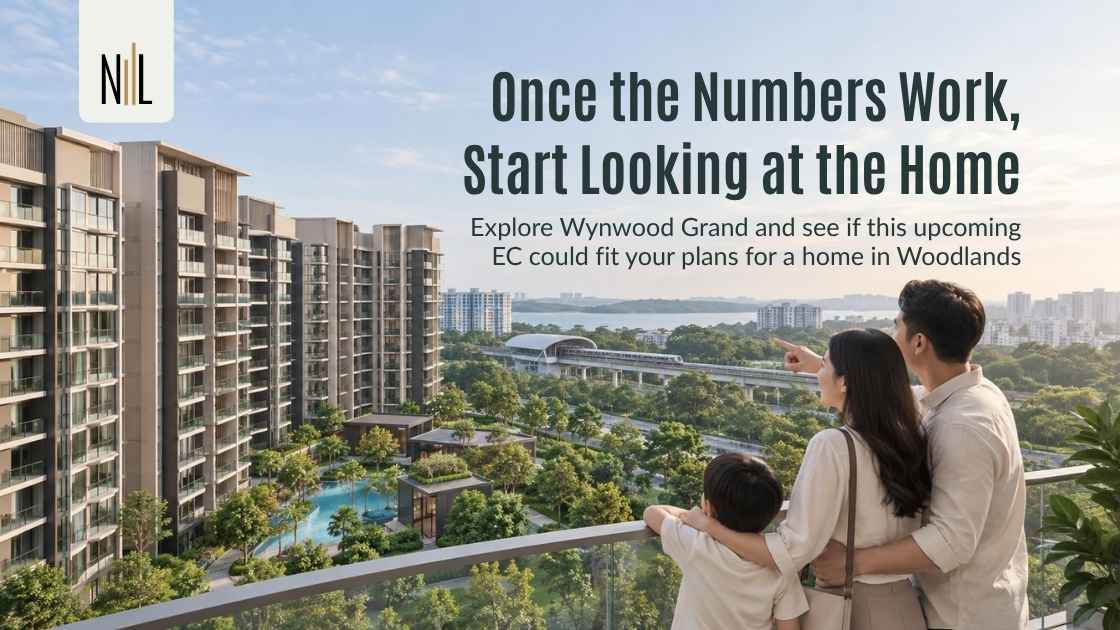
One thing to keep an eye on is Wynwood Grand, an Executive Condominium situated on Woodlands Drive 17. The development is close to Woodlands South MRT, and Woodlands MRT is just a short walk away, making it easy for residents to use the bigger transport system in Woodlands while still being in a well-established neighborhood. Buyers should make sure to look up the most recent official information about the launch, prices, and who is eligible directly from the developer before they decide.
A Simple Way to Plan Your Executive Condo Purchase
Before you decide to buy a condominium in Singapore using the EC route, it’s helpful to carefully consider your eligibility and financing options in the correct order. First, check your family setup, nationality, age, income limit, and whether you own property. Then figure out how much you can borrow and how much cash and CPF money you have available. Once you have those numbers clear, you can compare electric car options by looking at where they’re available, how well they fit your needs, and how much they will cost over time, instead of just going by the initial price.
An EC can provide a good option for buyers looking for condominium-style features while still qualifying to buy a condominium in Singapore. However, the right property should match both your money situation and how you live your daily life. By checking if they’re eligible early, learning about the newest financing rules, and thinking about both the initial and ongoing costs, buyers can better understand the financial side of their EC purchase.