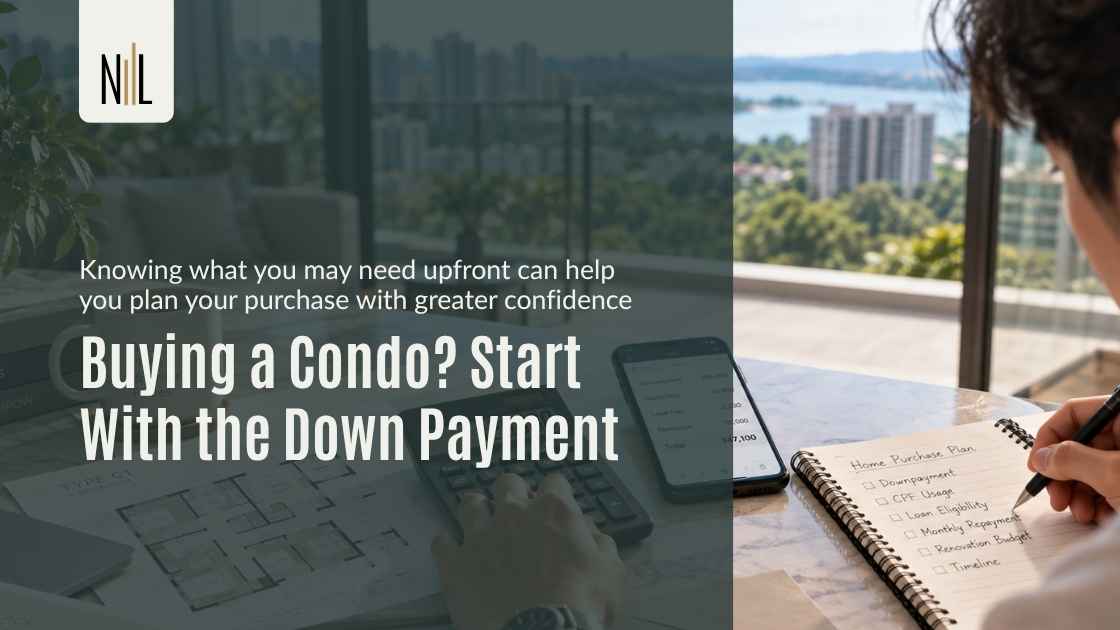
How much down payment for a condo in Singapore? The minimum down payment for a condo is one of the first things buyers should consider when planning to purchase a private property. While the down payment forms a large part of the initial cost, it is not the only expense to prepare for. Buyers also need to consider how much they can borrow, how much must be paid in cash, whether they can use their CPF savings, and other upfront costs such as Buyer’s Stamp Duty, legal fees, and potentially Additional Buyer’s Stamp Duty.
Beyond the purchase itself, monthly loan repayments, maintenance fees, property tax, and other ownership expenses can also affect your overall budget. This guide explains how condo down payments work, how much cash and CPF you may need, what additional costs to expect, and the practical factors to consider when choosing a condo that fits both your finances and lifestyle.
How Much Down Payment For a Condo in Singapore?
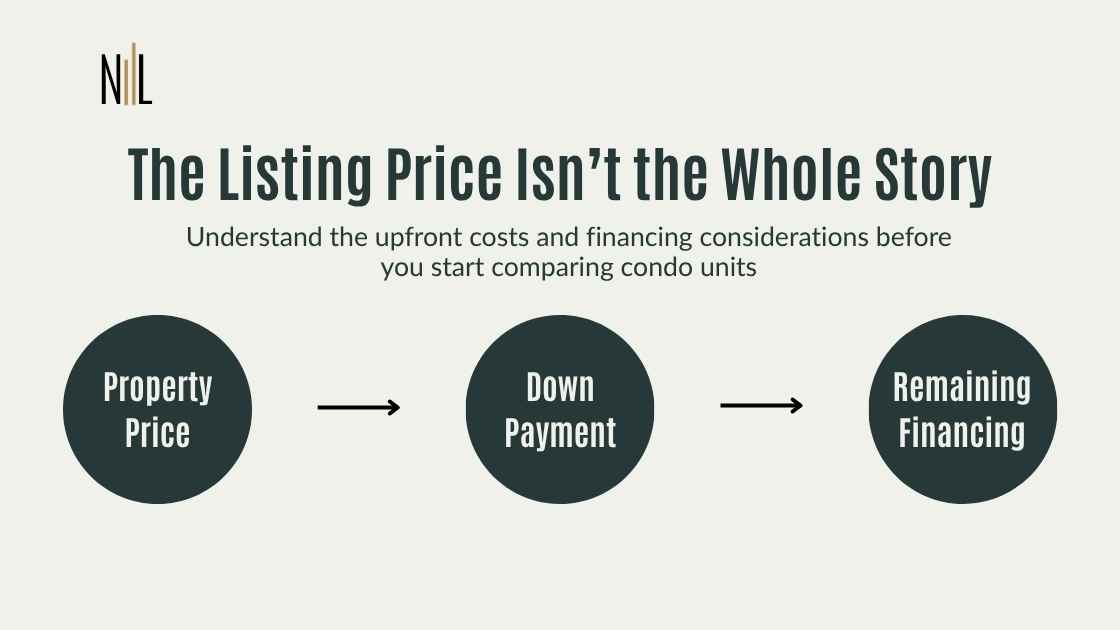
When buying a private condominium with a bank loan, the highest loan-to-value ratio allowed can be up to 75% of the lower amount between the purchase price and the property’s market value, as long as it follows the relevant rules. This means that buyers who are eligible for the full 75% loan usually have to pay the other 25% on their own.
The key thing is that the 25% doesn’t have to come entirely from cash. CPF Ordinary Account (OA) savings can be used for some of the purchase, but it depends on the rules of CPF and the set limits. When you take out a bank loan, at least 5% of the total purchase price has to be paid in cash.
For example, if you buy a private condo for S$1 million and are eligible for a 75% bank loan, the highest amount you can borrow is S$750,000. The remaining S$250,000 forms the down payment. Buyers have to pay at least S$50,000 of the total amount in cash. You can usually pay the remaining S$200,000 in cash or using eligible CPF OA savings.
The real amount may vary if the bank doesn’t approve the highest possible loan-to-value ratio. Your current home loans, the length of your loan, and other factors can influence how much money you are able to borrow. That’s why buyers need to look at how much they can borrow before thinking that every S$1 million condo needs exactly S$250,000 paid upfront.
Minimum Down Payment for Private Condo Singapore: Cash vs CPF
The first thing buyers should know is the difference between cash and CPF. The 5% cash component is important because buyers can’t just assume all of their 25% down payment comes from CPF. When buying a house with a bank loan, the CPF Board says that at least 5% of the total cost must be paid with cash. The rest can be covered using CPF OA savings or cash, as long as it follows the rules set by the authorities.
This can really matter when you’re buying a more expensive home.
| Condo Price | 75% Bank Loan | 25% Down Payment | Minimum 5% Cash |
| S$800,000 | S$600,000 | S$200,000 | S$40,000 |
| S$1,000,000 | S$750,000 | S$250,000 | S$50,000 |
| S$1,200,000 | S$900,000 | S$300,000 | S$60,000 |
| S$1,500,000 | S$1,125,000 | S$375,000 | S$75,000 |
| S$2,000,000 | S$1,500,000 | S$500,000 | S$100,000 |
These numbers show the highest possible scenario where the loan-to-value ratio is 75%. They don’t cover stamp duties, legal fees, renovation costs, or any other transaction expenses. For example, a buyer looking at a S$1.5 million condo might first think, “I need S$375,000.” But in reality, the amount of money needed upfront can be more when you consider taxes and other costs.
That’s why it’s better to consider your overall upfront budget, instead of just the down payment that’s shown in the advertisement.
What Other Costs Should You Prepare For?
The down payment is just one part of the total amount needed to buy a private condo. Singapore charges Buyer’s Stamp Duty when someone buys a property in Singapore. These costs can add to the total amount needed. Buyer’s Stamp Duty is charged when someone buys a property in Singapore. IRAS uses the higher amount between the purchase price and the market value to determine the BSD. For homes, the tax rate can be between 1% and 6%, depending on how much the house is worth.
For example, if the property is valued at S$1 million, the BSD calculation is applied step by step. You do this for each different price range. This means you shouldn’t just take the whole cost of the purchase and multiply it by one percentage.
ABSD might also be applicable based on your citizenship, where you live, and how many homes you already own. A Singapore citizen who buys their first residential property doesn’t have to pay ABSD.
A Singapore citizen who buys their first residential property doesn’t have to pay ABSD. Singapore citizens who want to purchase a second home have to pay a 20% additional buyer’s stamp duty. These charges can affect the total amount you need to pay upfront.
This is why two people buying condos for the same price might end up paying very different amounts upfront. You should also include legal fees, costs related to valuing the property, and other expenses that come with the transaction. You should include these costs in your budget. If you’re buying a new property, make sure to think about the cost of future updates and decorating it too.
Can You Use Your CPF to Pay For a Private Condo?
Yes. CPF OA savings can usually be used to buy a private home, like paying for the down payment and some other allowed costs. However, it has to follow the rules set by CPF. Using CPF doesn’t mean that buying a condo is done without using cash. The minimum cash amount still needs to be included, even if you take out a bank loan.
Buyers should also consider how much of their CPF they want to use for the property. CPF savings are part of the money you will use when you retire. Using more of your OA for property could leave less money available for other financial goals in the future. Before deciding how much property you can comfortably afford, it’s wise to check both your cash savings and your CPF balance.
The CPF Board also suggests looking at a balanced approach that includes both cash and CPF funds for paying for housing. This is instead of depending only on OA savings.
What If The Bank Doesn’t Lend 75%?
This is where some buyers are surprised. The 75% number shows the highest loan-to-value ratio allowed in those specific situations. It doesn’t mean that every buyer will get a 75% loan. Your excellent housing loans, loan period, and other factors can influence the applicable loan-to-value ratio. Your income and the debts you already owe are important because banks check if you can afford to pay back the loan.
Another important factor to consider is the Total Debt Servicing Ratio (TDSR). For home loan payments, your total monthly debt payments usually should not be more than 55% of your total monthly income. This covers your new home loan and other related debts.
If your ability to borrow is less than expected, you’ll have to come up with more of the money yourself for the purchase. For example, if a S$1 million condo can only get a 60% loan instead of 75%, then the loan amount would be S$600,000, and you would have to come up with the remaining S$400,000 yourself, before factoring in other costs for buying the property.
That’s why looking at your finances early on can help you avoid getting attached to a house that ends up being too expensive for you.
How to Choose a Condo That Fits Your Budget
Knowing your down payment is important, but it shouldn’t be the only thing that decides where you look for a property. A condo might look cheap on paper but could still not be a good match for your daily life. Before starting a development project, think about these useful tips:
- Look at your total monthly housing cost: Include the mortgage, maintenance fees, property tax, and regular household expenses. Don’t focus only on the loan payment.
- Check the location during your normal commute: A plan that seems easy on a map might feel much harder during busy times.
- Think about how you will use the space: A couple who works from home might want a good place to study. A growing family might need bigger bedrooms and easier access to schools.
- Check the surrounding amenities: Supermarkets, hospitals, restaurants, parks, and malls can greatly improve everyday life.
- Leave room for future expenses: After moving in, things like fixing up the place, buying new furniture, making repairs, and changing your daily routine can add up pretty fast.
The best condo isn’t always the most expensive one you can afford. It’s the one that offers you a good mix of housing costs, location, and the lifestyle you really want.
What Are the Benefits of Living in a Condo?
For many buyers, the attraction of a private condo is more than just owning a property. Condo buildings usually have common areas and facilities that you don’t get in a regular apartment or HDB flat. Depending on the project, residents might be able to use swimming pools, gyms, function rooms, landscaped areas, playgrounds, and other recreational spaces.
These facilities can make daily life easier and more convenient. Residents don’t need to pay for a gym membership on their own or go somewhere else to swim. Both options are available inside the development. There is also the social aspect. Condo buildings have common areas where people can get to know their neighbors. Families can enjoy more chances for their kids to play around in the living area.
Of course, the facilities also require money to keep them in good condition. Before buying, buyers need to look into the monthly maintenance fees and know exactly what those fees include. The cost of keeping shared areas, gardens, safety, and cleanliness is part of the overall experience of owning a home.
Why Location Matters: Looking at Wynwood Grand in Woodlands
Once you know how the money part works when buying a condo, the next big thing is where it’s located. One thing to keep an eye on in northern Singapore is Wynwood Grand, a new Executive Condominium. The project will be at Woodlands Drive 17. City Developments Limited is developing the project and plans to include around 420 residential units.
The site has a 99-year leasehold agreement. Even though an Executive Condominium has different rules for who can buy it, it still provides many nice lifestyle benefits. People usually enjoy these benefits with condominium living. Wynwood Grand is a good example for people looking to buy a newer home in Woodlands.
The project is also near Woodlands South MRT, which connects to the Thomson-East Coast Line. The surrounding area has good facilities like shops, schools, hospitals, and places to relax and play.
What Is Around Wynwood Grand?
One of the more interesting things about Wynwood Grand is that buyers aren’t starting from scratch in an area that hasn’t been developed yet. Woodlands already has shops, restaurants, medical care, and places to play and relax. Causeway Point is a major shopping area in the region, and Woodlands Health Campus is a key healthcare facility located close by.
There are also parks and outdoor areas near the bigger Woodlands area. Woodlands Waterfront Park provides a slower, more peaceful experience compared to the usual busy city life. It has nice views of the water, walking paths, and a long pier to walk along. For families, the nearby school system is another important factor to consider. There are several schools in the wider Woodlands area, so families have different choices to consider based on their kids’ needs and the rules for getting into each school.
The transport network is another advantage. Woodlands South MRT station is connected to the Thomson-East Coast Line. Woodlands MRT station is linked to both the Thomson-East Coast Line and the North-South Line. For people who buy homes in different parts of Singapore, having several ways to get around can really help with their daily travel.
Tips for Choosing the Right Condo for You
No one condo is perfect for every buyer. Your main goals should decide where you focus your attention and how much money you spend. Start with your finances, then work backwards. If a property costing S$1.5 million needs a big chunk of your savings up front, consider buying something cheaper instead of going for a more expensive one. Don’t choose a more expensive one just because the bank is willing to give you a bigger loan.
Next, think about your routine. If you depend on public transportation, make sure to choose a location that has easy access to the MRT. If you have little kids, things like schools and family-friendly facilities could be more important. If you work from home, think about how you arrange the space, instead of just looking at the building’s features.
Finally, visit the neighbourhood more than once. A visit during the weekend might show you something quite different compared to coming in the morning or evening on a weekday. The right property should function well on paper and also be practical in your daily life.
Plan Your Condo Purchase Beyond the Down Payment
How much should you save for a down payment when buying a condo? If a buyer can get up to a 75% loan from the bank, they usually need to pay at least 25% of the home’s price as a down payment. And at least 5% of that has to be paid with cash. But that is only the starting point.
Costs like BSD, maybe ABSD, legal fees, renovation expenses, maintenance charges, and other ownership-related expenses can make the total amount you need to save higher. Your real financial situation might require you to pay more upfront if you can’t get the highest loan-to-value ratio.
For people looking to buy an Executive Condominium like Wynwood Grand, the way things are calculated is a bit different because ECs have their own rules about who can buy them and how the money works. Even so, the same idea holds: know the total cost before you decide
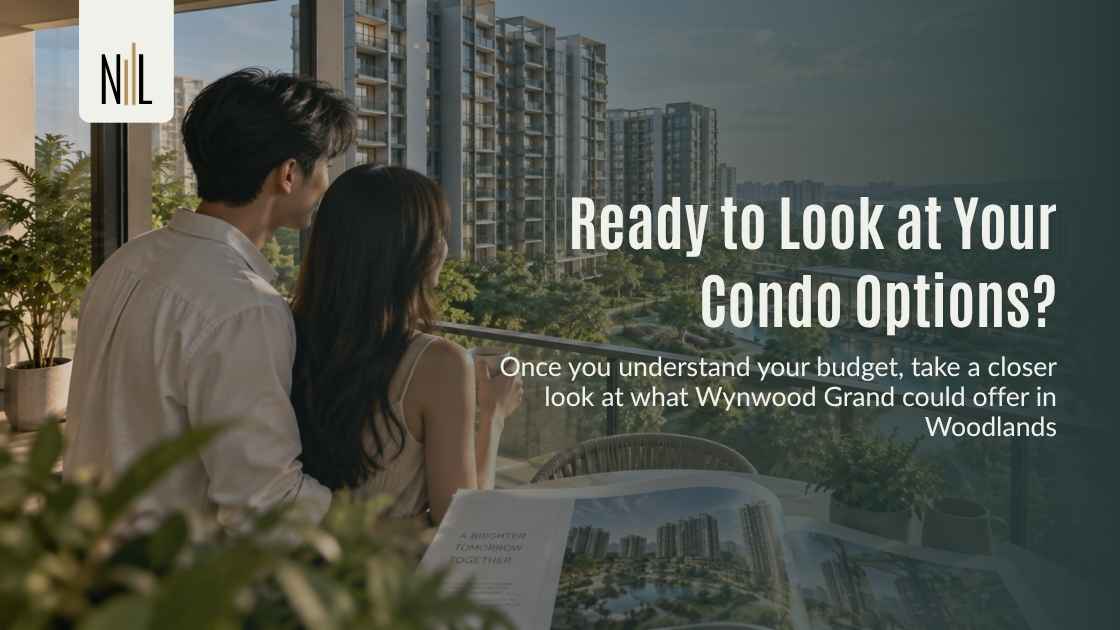
Wynwood Grand is a good choice for people who want to live in a condominium-style building in Woodlands. Living near Woodlands South MRT, with existing shops, schools, hospitals, and parks, offers residents more than just a place to live. It also places them in a neighborhood where many everyday conveniences are already available.
If you are thinking about buying a condo or an Executive Condominium, look beyond the purchase price and financing. Understanding the down payment for a condo in Singapore, as well as the ongoing costs of maintaining the property, can help you plan your budget realistically and make a more informed decision about your future home.